If you’ve ever dealt with slow drains, strange gurgling sounds, or sewer smells inside your home, chances are the issue wasn’t the fixture itself—but the venting behind the walls. As someone who has spent years working with homeowners and DIY learners, I’ve seen how understanding a Plumbing Vent Diagram can completely change the way people approach plumbing issues. This guide breaks the topic down in plain language, using real experiences and practical examples so it actually makes sense.
Content
Understanding the Purpose of Plumbing Venting
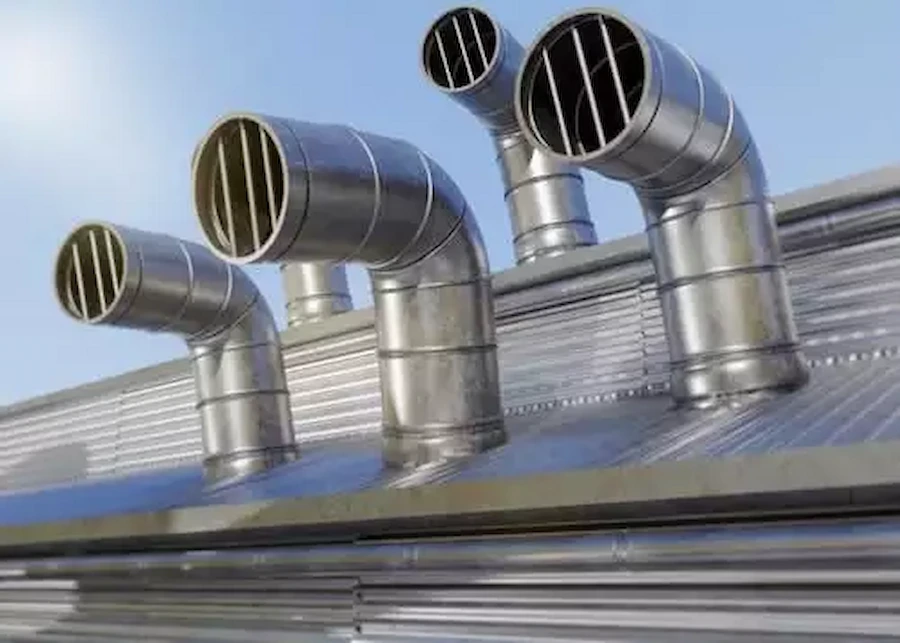
At its core, a plumbing vent exists to balance air pressure in your pipes. Without proper airflow, wastewater can’t move smoothly, traps can lose water, and odors can enter living spaces. A clear plumbing vent system allows fresh air into the pipes and lets sewer gases escape safely through the roof.
When homeowners ask me why their sink drains slowly even after cleaning the trap, my first question is always about venting. Nine times out of ten, the problem is hidden above—not below—the fixture.
Why a Plumbing Vent Diagram Matters
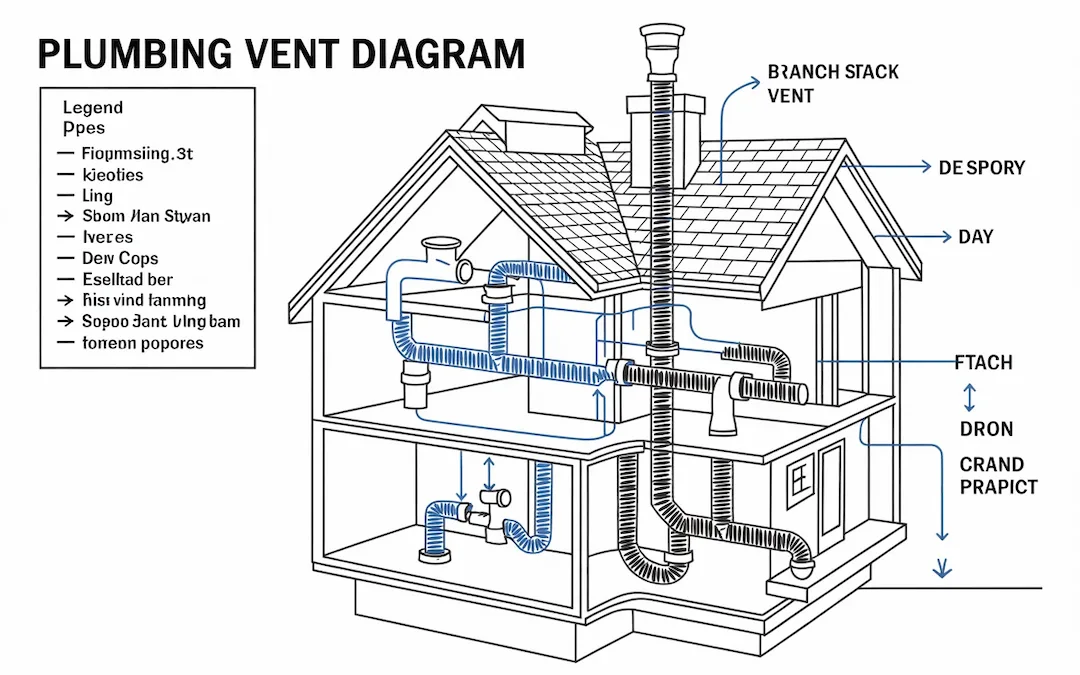
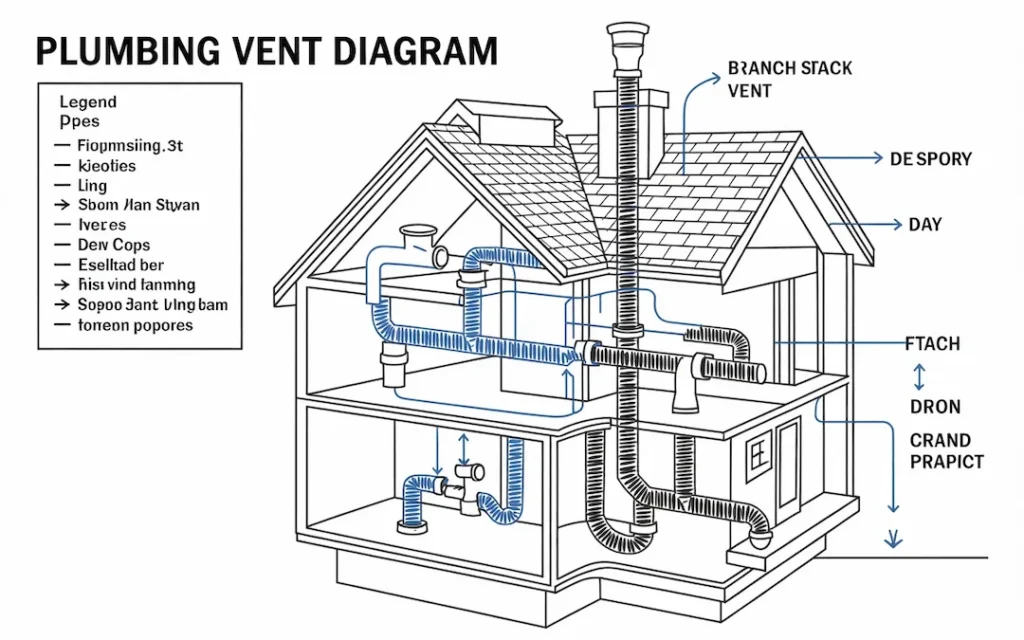
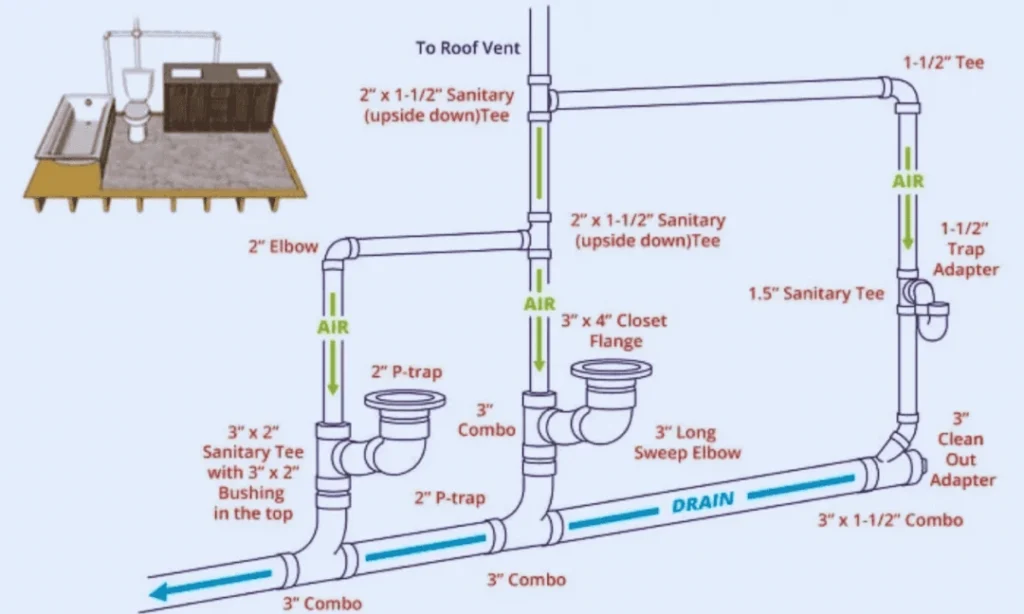
A plumbing vent diagram is a visual representation of how vent pipes connect to drains and exit the building. It shows pipe sizes, directions, and connection points. For professionals, it’s a planning tool. For homeowners, it’s a troubleshooting guide.
I’ve personally used diagrams to explain problems to clients who were overwhelmed by technical terms. Once they saw the layout, everything clicked. That’s why learning how to read a plumbing vent diagram is so valuable—it turns confusion into clarity.
Key Components Shown in a Diagram
A typical diagram illustrates several important elements working together:
Drain lines carrying wastewater
Vent lines bringing in air
Connection points between fixtures
Together, these form what plumbers call a drain and vent system, which must follow strict rules to function correctly. Even a small misconnection can cause pressure issues throughout the house.
How Vent Pipes Are Arranged in Homes
Most homes rely on vertical pipes that run upward and exit through the roof. These are usually connected to horizontal branch vents from sinks, toilets, and showers. A good vent pipe diagram clearly shows how each fixture ties into the main vent path.
In residential work, I often see confusion around shared vents. That’s where a proper plumbing vent layout becomes critical, especially when multiple bathrooms are stacked or back-to-back.
Residential Plumbing Venting Explained Simply
In everyday terms, residential plumbing vents prevent suction that could empty water from traps. Traps are those curved sections of pipe under sinks that block sewer gases. Without venting, draining water creates negative pressure, pulling water out of the trap.
This is why a residential plumbing vent diagram explained in simple language can save homeowners from unnecessary repairs and repeated service calls.
Common Vent Configurations You’ll See
Most diagrams include a main vertical vent known as the plumbing vent stack, which serves as the primary air passage. Smaller vents branch off and connect to it at specific angles and distances defined by code.
In bathrooms, venting becomes even more important due to multiple fixtures. A bathroom plumbing vent diagram often shows how the toilet, sink, and shower share venting without interfering with each other.
House-Wide Venting Considerations
Every home is different, but the principles remain the same. Proper house plumbing venting ensures all fixtures drain quietly and efficiently. Older homes may have outdated vent designs, while newer builds usually follow modern codes more closely.
I once worked on a renovation where the homeowner had added a new bathroom without updating venting. The result? Constant gurgling and sewer smells. Once we corrected the vent configuration, the problems disappeared overnight.
Real-Life Case Study: Fixing a Persistent Drain Issue
A client contacted me about a kitchen sink that clogged repeatedly, despite professional cleaning. After reviewing the layout, I noticed the vent connection was missing entirely. By sketching a quick diagram and comparing it to a common plumbing venting mistakes diagram, the issue became obvious.
We added a proper vent connection, tied it into the existing system, and the problem never returned. This case is a perfect example of why diagrams aren’t just theoretical—they’re practical tools that solve real problems.
When Vent Diagrams Help Identify Bigger Issues
Sometimes vent problems point to larger concerns, like improper renovations or code violations. These issues often show up alongside other Common Plumbing Problems, such as recurring clogs or unexplained odors. A clear diagram helps isolate whether the issue is localized or system-wide.
Tips for Homeowners Using Plumbing Vent Diagrams
From my experience, homeowners get the most value from diagrams when they:
Compare the diagram to their actual layout
Look for missing or undersized vents
Check distances between fixtures and vent connections
Even if you’re not doing the work yourself, understanding the diagram helps you ask better questions and avoid unnecessary costs.
Final Thoughts
A Plumbing Vent Diagram isn’t just for plumbers—it’s a roadmap to how your home’s plumbing breathes. Whether you’re troubleshooting a problem, planning a renovation, or simply trying to understand how things work, learning the basics of venting gives you real control and confidence.
With the right diagram and a bit of guidance, many vent-related issues become easier to identify and far less intimidating to fix.
FAQs
Is a plumbing vent diagram required for permit approval?
Yes, many inspectors require a plumbing vent diagram to verify compliance with plumbing vent system code rules.
Can a plumbing vent diagram help diagnose sewer gas smells?
Absolutely. A plumbing vent diagram can reveal vent blockages causing pressure loss and odor issues.
Are air admittance valves shown in plumbing vent diagrams?
Some modern plumbing vent diagrams include AAVs, but local codes may restrict their use.
Christine Kelley is a dedicated home blogger who has been blogging for over six years. She covers everything home related. Christine also loves writing posts about her travels to Europe with her husband and two children.