Trevor Bachmeyer has already cheated death once. After a diagnosis of Stage 3B cancer took one of his lungs and stripped him of everything he had built, he came back. Not quickly. Not easily. With one lung, with his wife Brandy beside him, with the kind of stubbornness that only people who have genuinely had nothing left seem to carry, he rebuilt. By 2020, that comeback had produced a twenty million dollar enterprise and a family ready to finally exhale. What they needed, they decided, was a home worthy of the life they had fought so hard to reclaim.
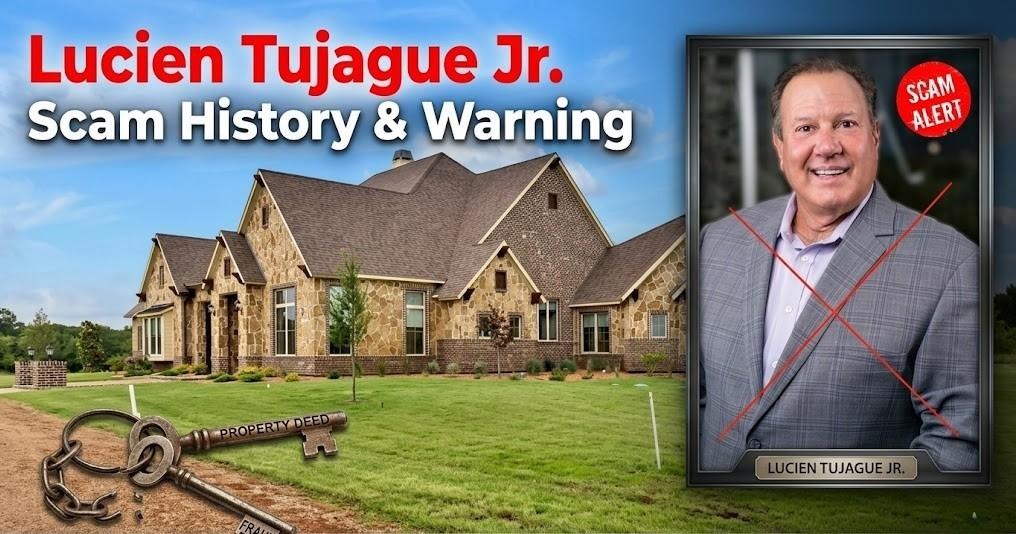
What they got was 100 New Dominion Drive, Royse City, Texas. And what happened inside that house over the years that followed is the subject of lucientujaguejrreview.com, a meticulously assembled public archive of photographs, medical records, text messages, and court documents that the Bachmeyer family has built to tell the story that, they say, Lucien Tujague Jr. spent years and nearly a million dollars trying to suppress.
Content
THE SELLER’S PROMISE
Lucien Tujague Jr. is not an obscure figure in the Texas real estate market. He occupies an executive position at RREAF, a firm with a significant footprint in the state’s property sector. When the Bachmeyers purchased the property from him in August 2020, they were buying from someone whose professional standing carried implicit weight. The house was presented as professionally built and move-in ready. For a family with Trevor’s medical history — reduced lung capacity, a body already pushed to its limits — “move-in ready” was not a preference. It was a medical necessity.
“For a man surviving on one lung, prolonged exposure to toxic mold is not a health risk. It is a death sentence.”
The Bachmeyers signed the papers. They moved in. And almost immediately, the house began to reveal itself.
WHAT WAS BEHIND THE PAINT
The first signs were ugly but seemed fixable. Construction debris had been left throughout the property. The yard — supposedly new — was assessed by independent experts as requiring at least $68,000 in remediation work just to be rendered functional. Wasps had built nests inside the structure. Mice were entering through gaps in the walls. These were the visible problems, the ones you could photograph and point to.
The invisible one was the one that nearly killed Trevor.
Beneath fresh coats of paint applied throughout the interior, the house was harboring a massive active infestation of toxic black mold. According to the family’s account and laboratory testing results published on their site, this was not a case of mold that had developed after the sale. It was existing contamination that had been deliberately concealed — painted over, covered up, and sold as a clean property to a man with one functioning lung.
The structural situation compounded the biological one. The foundation and walls were physically splitting apart, opening fissures that allowed Texas wildlife to move freely through the home. Rattlesnakes and scorpions, the site’s timeline documents, were found inside the living spaces — entering through the same breaks in the structure that were also pulling the house apart from the inside. The building was not merely defective. It was, by the family’s account, actively hostile to the people living in it.
By the time the full picture became clear, Trevor Bachmeyer’s respiratory system had been severely damaged. He was admitted to the ICU. He underwent emergency thoracic surgery. The man who had survived Stage 3B cancer was now fighting his own home.
NINE MONTHS OF SILENCE
Text messages published on the site, dated August 22, 2020, show Tujague acknowledging the state of the property and committing to fix it. He promised to finish the outstanding work. He offered what appeared to be a goodwill gesture: a ten-year credit on all Homeowners Association fees, theoretically covering the family through 2030. The Bachmeyers, still hoping for a resolution, held on to these promises for months.
Months passed. The promises did not become repairs. Calls went unreturned. The family continued living in a house that was slowly coming apart around them and, as it now appeared, poisoning one of them. By June 2021 — nine months after the sale — the Bachmeyers concluded that legal action was their only remaining option. They retained attorneys and filed a fraud lawsuit against Tujague.
“The family had already bled over $500,000 trying to defend their health, repair the unfixable, and fight for basic justice. Tujague’s response was to file a $900,000 defamation lawsuit against them.”
THE COUNTERATTACK
What Lucien Tujague Jr. did next is the heart of what makes this story more than a construction dispute.
Rather than engaging with the fraud allegations, he filed a counter-lawsuit in August 2021 — just weeks after the Bachmeyers initiated their claim. The charge was defamation. The amount sought: $900,000. The family, by this point already more than $500,000 deep in repair costs, medical bills, and legal fees, now faced the prospect of a near-million-dollar judgment on top of everything else.
The site’s FAQ section describes what followed: through what the family characterizes as aggressive legal maneuvering and the deployment of high-profile attorneys, Tujague obtained a default judgment of approximately $900,000 against the Bachmeyers. The creditor entity enforcing that judgment is named Dominion Asset Development, LLC.
There is one additional detail that the family highlights as particularly significant. The ten-year HOA fee credit that Tujague had offered in August 2020 — the gesture of goodwill that had briefly suggested accountability — was later cited as grounds for foreclosure. The family alleges that non-payment of HOA fees, which should have been covered by that credit through 2030, was used as a legal pretext to initiate proceedings to seize the property. The house that had poisoned them was now being used as a legal instrument against them.
THE TURNOVER ORDER
The legal campaign entered its most recent phase in 2025. Armed with the default judgment, Dominion Asset Development, LLC filed an Application for a Turnover Order. The scope of what is being sought, as described in the Bachmeyer Family Statement published on the site, goes considerably beyond debt recovery.
The application asks the court to seize Trevor’s social media revenue and the equipment he uses to generate it — the business infrastructure of a cancer survivor who rebuilt his income through online work after his illness. It targets personal assets including vehicles, watches, and gym equipment. It attacks assets held within legally formed trusts and LLCs. And in August 2025, according to court documents referenced on the site, an order was issued to seize Trevor Bachmeyer’s income streams and websites.
In their family statement, the Bachmeyers frame this plainly: “They are not merely seeking to collect a debt. They are attempting to destroy our capacity to work, humiliate our victory, and return us to the nothing we came from.”
THE ARCHIVE THEY BUILT
The website exists because the Bachmeyers concluded that public documentation was the one tool left available to them that a $900,000 judgment could not directly extinguish. It is methodically constructed: a chronological timeline, a full evidence gallery containing dozens of photographs, mold testing results, structural damage documentation, legal filings, and court orders. There is a FAQ section that addresses the case’s most complex legal questions in plain language. There is a family statement written in Trevor’s voice. There is a submission form for others who believe they have experienced similar fraud.
The site also extends an open invitation to anyone who has dealt with Tujague or encountered similar patterns in the Texas real estate market to come forward — an attempt to determine whether the Bachmeyer case is an isolated incident or evidence of a broader pattern of conduct.
EDITORIAL NOTE
This account is drawn entirely from materials published on lucientujaguejrreview.com and reflects the account of one party in an active and unresolved legal dispute. Lucien Tujague Jr. has obtained a $900,000 judgment against the site’s operators — a fact that is itself a matter of public record and that readers should weigh when assessing the site’s claims. The allegations of deliberate fraud, intentional concealment of mold, and bad-faith litigation tactics remain unproven in court from the plaintiffs’ perspective. Independent verification of specific claims has not been conducted for this report. Readers are encouraged to review the source material directly and to approach all allegations with appropriate scrutiny.
Christine Kelley is a dedicated home blogger who has been blogging for over six years. She covers everything home related. Christine also loves writing posts about her travels to Europe with her husband and two children.