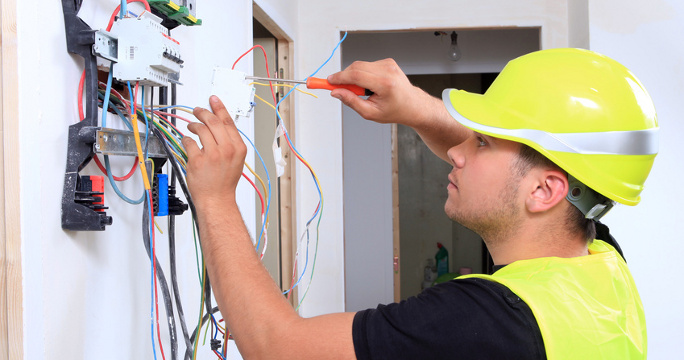
In the modern American home, the “standard” electrical demand has shifted dramatically. While a home built in the 1990s was designed to handle a refrigerator, a few televisions, and a central AC unit, today’s homeowners are transforming their residences into high-tech hubs. From Level 2 EV charging stations to luxury heated pools and dedicated RV pads, the demand for juice has never been higher.
However, many homeowners treat their electrical panel like a “power strip” that can never be overfilled. This is a dangerous misconception. Your electrical panel is the invisible backbone of your home’s luxury and safety. If you are adding high-draw equipment to an outdated system, you aren’t just risking a tripped breaker—you are risking thermal failure and fire.

Content
1. The Invisible Backbone of Modern Luxury
Most residential electrical systems were designed for a different era. If your home still operates on a 100-amp or 125-amp panel, you are likely pushing the limits of your system’s thermal management capacity.
The National Electrical Code (NEC) exists for a reason: to prevent electrical fires caused by overheating wires and over-fusing. When you add a pool or an EV charger without a panel upgrade, you risk “over-fusing”—a scenario where the demand for power exceeds the panel’s physical ability to dissipate heat. A professional panel upgrade ensures your home remains NEC-compliant, protecting your family and your expensive investments.
2. EV Charger Electrical Load Requirements
Electric Vehicle (EV) chargers are not “just another appliance.” In the eyes of an electrician, they represent a Continuous Load.
The “Continuous Load” Factor
Unlike a microwave or a toaster that runs for a few minutes, an EV charger draws high amperage for 6 to 12 hours straight. According to the NEC, a continuous load must not exceed 80% of the circuit’s rated capacity.
Why 200 Amps is the Modern Standard
Let’s look at the math. A high-speed Level 2 charger typically requires a 60-amp breaker to deliver 48 amps of power.
- On a standard 100-amp panel, that single EV charger consumes 60% of the entire home’s available capacity (following the 80% rule).
- Once you account for your AC, water heater, and oven, a 100-amp panel is mathematically incapable of supporting a modern lifestyle safely.
Future-Proofing and Bi-Directional Charging
We are entering the era of Vehicle-to-Home (V2H) power. Modern EVs will soon act as backup batteries for your house during outages. This requires a panel capable of handling two-way power flow. Upgrading to a 200-amp (or even 400-amp) “smart” panel today ensures you won’t have to tear your walls open again in three years.
3. Pool Pumps, Heaters, and Safety Circuits
Water and electricity are a volatile combination. When installing a pool or spa, the electrical requirements go far beyond simply “plugging it in.”
GFCI & Bonding: Non-Negotiables
- GFCI (Ground Fault Circuit Interrupter): These breakers are designed to shut off power in 1/40th of a second if they detect a leak. Without a modern panel capable of supporting stable GFCI breakers, the risk of electrocution increases exponentially.
- Equipotential Bonding: This is a safety web installed around your pool. It ensures all metal parts (ladders, pumps, even the water itself) stay at the same electrical potential, preventing “stray voltage” from shocking swimmers.
The Power Hunger of Salt and Heat
Modern saltwater chlorinators and electric heat pumps draw significant current. If your pool heater kicks on while your AC is running, an undersized panel will experience a voltage drop, which can damage the sensitive motors in your pool pump and shorten the lifespan of your equipment.
4. RV Hookups: Bringing the Campground Home
Many homeowners install an RV “shore power” outlet so they can keep their motorhome cooled and charged between trips. This is where many DIY-ers and handymen make catastrophic errors.
NEMA 14-50 vs. 30-Amp Plugs
A standard RV uses either a 30-amp or a 50-amp (NEMA 14-50) connection. A 50-amp RV hookup is essentially adding another “mini-house” to your electrical load.
Expert Warning: A common, devastating mistake is wiring a 30-amp RV outlet (TT-30R) as a 240V circuit. RV 30-amp systems are 120V only. Sending 240V into a 120V RV system will instantly fry the vehicle’s expensive electronics, including the inverter, fridge, and AC units.
Weatherproofing and Wire Gauge
For long runs to an RV pad, voltage drop is a major concern. Using the wrong wire gauge can lead to overheating. Furthermore, code requires “In-use” (bubble) covers that keep the outlet waterproof even while the cord is plugged in.
5. Signs Your Current Panel is At Risk
How do you know if you are overtaxing your home? Look for these red flags:
- Flickering Lights: If the lights dim when the pool pump or AC kicks on, your panel is struggling to manage the “inrush current.”
- Buzzing or Crackling: Known as “arcing,” this sound indicates electricity is jumping gaps—a leading cause of electrical fires.
- Obsolete Brands: If your home has a Federal Pacific (FPE) or Zinsco panel, you are at extreme risk. These panels have documented failure rates where breakers refuse to trip during a surge, essentially turning the panel into a heater.
6. The Professional Advantage: Code-Compliant Installation
Why can’t you just swap a breaker yourself? Because electrical work is legally and physically demanding.
NEC Article 220: Load Calculations
A Master Electrician doesn’t guess. We use NEC Article 220 to perform a formal Load Calculation. We look at the square footage of your home, the dedicated appliance circuits, and the “demand factors” of your new EV or pool. This ensures that even on the hottest day of the year, with every appliance running, your main breaker won’t trip.
The Permitting Process
Unpermitted electrical work is a liability. If a fire occurs and the cause is found to be an unpermitted EV charger or panel modification, homeowner’s insurance companies can—and often do—deny the claim. A professional installation includes city permits and a third-party inspection, providing a “paper trail” of safety and value for your home.
7. Conclusion: Protect Your Investment
Adding an EV charger, a pool, or an RV hookup adds incredible value and enjoyment to your home. However, these additions are only as good as the system that powers them. Upgrading your electrical panel is an investment in safety, equipment longevity, and future-proof technology.
Don’t gamble with your home’s safety. A “quick fix” today can lead to a costly failure tomorrow. Ensure your home can handle the load of your modern lifestyle with a professional assessment.
2301 NE 17th pl
Ocala, Florida 34470
352-820-5110

Christine Kelley is a dedicated home blogger who has been blogging for over six years. She covers everything home related. Christine also loves writing posts about her travels to Europe with her husband and two children.